
Love the Puppy. Raise the Dog He’s Going to Become.

Mastiff and her puppies.
Every extra-large-breed dog starts out as a puppy. Big for their age even then, but still small and adorable. Puppies are very good at making us forget what’s coming in just a few months—a very large dog.
That little puppy jumping up to greet you? Cute.
Pulling toward somebody because he wants to say hello? Manageable.
Climbing into your lap without being invited? Adorable.
Deciding that the person walking toward your house looks suspicious? Maybe even a little reassuring.
Now fast-forward a year.
The puppy weighs 120 pounds.
That’s when “cute” can become a problem.
One of the best things we did with Waylon was start teaching him what we expected while he was still small enough that we could physically manage his mistakes. And I’ve become more convinced of something the longer I’ve lived with a giant-breed dog:
Training isn’t something you do for a few months. It’s part of living with your dog for life.
But training actually starts before you teach “sit,” “stay,” or “come.” It starts with knowing the breed.
Breed matters—not because a breed determines exactly who an individual dog will become, but because humans spent generations selecting dogs for particular traits and jobs.
Some guarded livestock. Some guarded homes and property. Some hunted. Some pulled carts. Some worked independently, making decisions without waiting for a human to tell them what to do.
Those instincts didn’t disappear because we put the dog on a couch and gave him a cute name.
That’s why researching a breed before bringing one home matters so much. Don’t just ask, “Do I love how this dog looks?”
Ask, “What was this dog bred to do—and am I prepared to live with those traits?”
Knowing some of your dog’s inherited traits can also help you understand your dog better.
A dog bred for generations to guard isn’t necessarily being “bad” when he’s suspicious of a stranger. A dog bred to work independently may not naturally look to you for direction every five seconds. A dog bred to chase, hunt, pull, protect, or patrol may bring some of those instincts right into your living room.
That doesn’t mean those behaviors should simply be accepted because “that’s the breed.” It means you know what you’re working with.
And when that dog may eventually weigh 100, 120, 150 pounds or more, understanding what you’re working with matters.
Start Early — And Train for the Life You Actually Live
When we brought Waylon home at 10 weeks old, we already had two other dogs. One of them was Cocoa, our 15-year-old Lab who had been with us for 10 years.
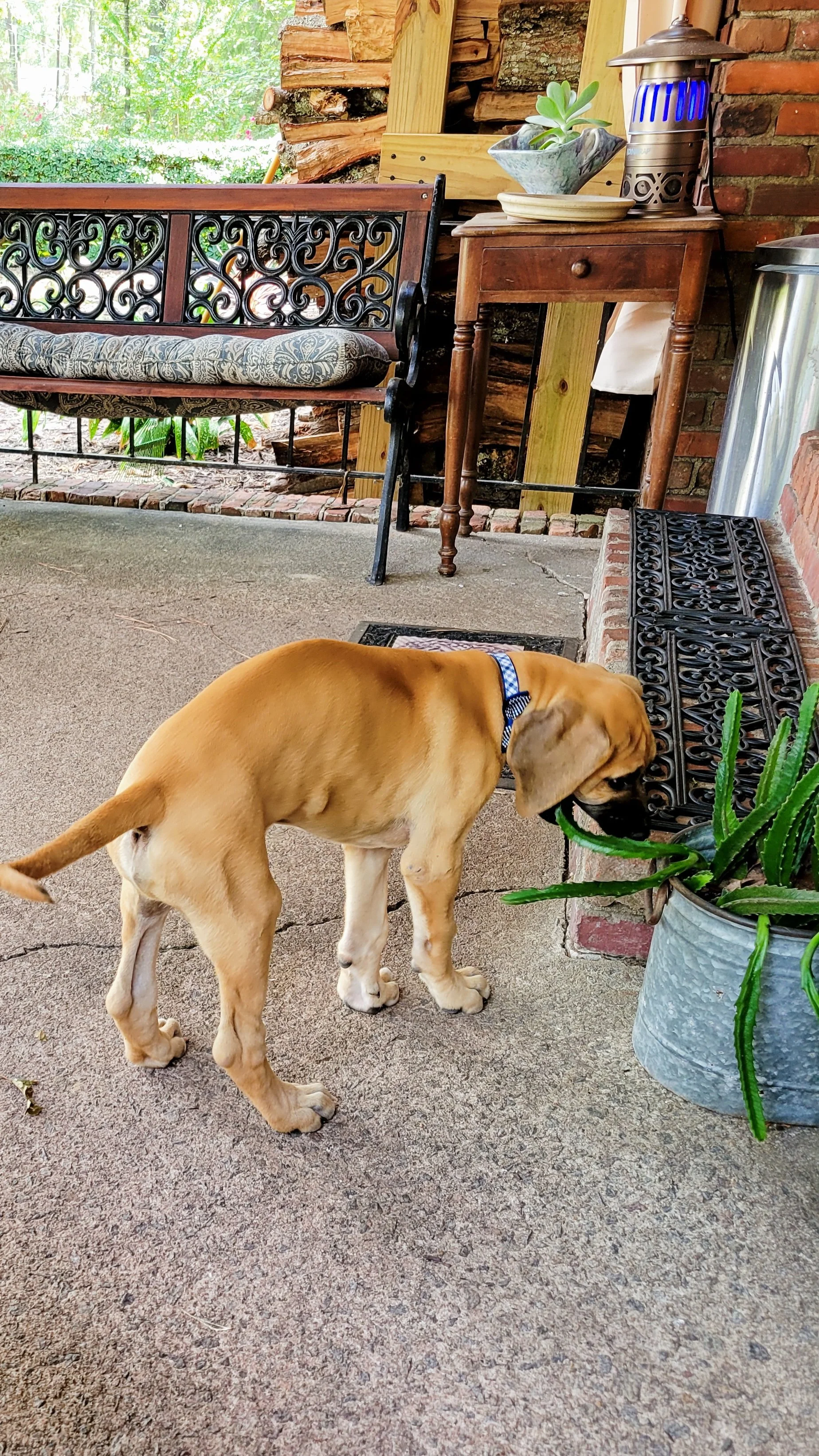
The day we brought Waylon home. Day 1
Cocoa definitely helped in the training department. There are some things an older, well-behaved dog can teach a puppy better than we ever could.
But starting on day two, I started teaching Waylon one word: Here.
To this day, it's probably the most important thing I've ever taught him.
When I call Waylon, I know he's coming to me.
We don't take Waylon everywhere. We don't even walk him through our neighborhood because we've had problems with loose dogs nearby. So I'm not going to pretend we've raised some perfectly socialized dog who accompanies us everywhere we go. We haven't. What we have done is train Waylon for the life we actually live.
Here. Stay. Leave it.
Those are my big three.
“Leave it” has saved me more times than I can count. We live where strange things occasionally appear in the yard—wild mushrooms, dead squirrels, skinks, and whatever other treasure Waylon has decided deserves further investigation.
Leave it. And he does.
“Stay” became increasingly important as he got bigger, especially when people came to our home.
Waylon is protective of me. If someone comes through the door or into the backyard, he's probably going to bark. I'm not trying to train every instinct out of him.
What I need is for him to listen to me.
When someone comes over, Waylon stays where I tell him while they come inside and get situated. Once I tell him it's okay, he's released and can go greet them—which generally involves a very thorough Great Dane inspection.
That's our routine.
He gets to be a dog. He gets to notice that someone has entered his home. He gets to sniff the new person from head to toe.
But I decide when the greeting happens.
And that distinction matters a whole lot more when the dog standing beside you weighs well over 100 pounds.
Recall Isn't Just a Trick
There are plenty of commands that are nice for a dog to know. For me, recall isn't one of the nice ones.
It's essential.
I want to know that if something unexpected happens—another animal appears, a gate is open, he finds something dangerous, someone comes into the yard—I can say “HERE” and Waylon's first response is to come to me.
We started building that habit when he was 10 weeks old. And we never stopped reinforcing it. That's what I mean when I say training a giant-breed dog isn't something you finish.
The 10-week-old puppy learns “here.”
The six-month-old puppy practices “here.”
The two-year-old dog still practices “here.”
And the adult dog who already knows perfectly well what “here” means?
He still gets asked to do it. Training becomes part of your relationship with your dog.
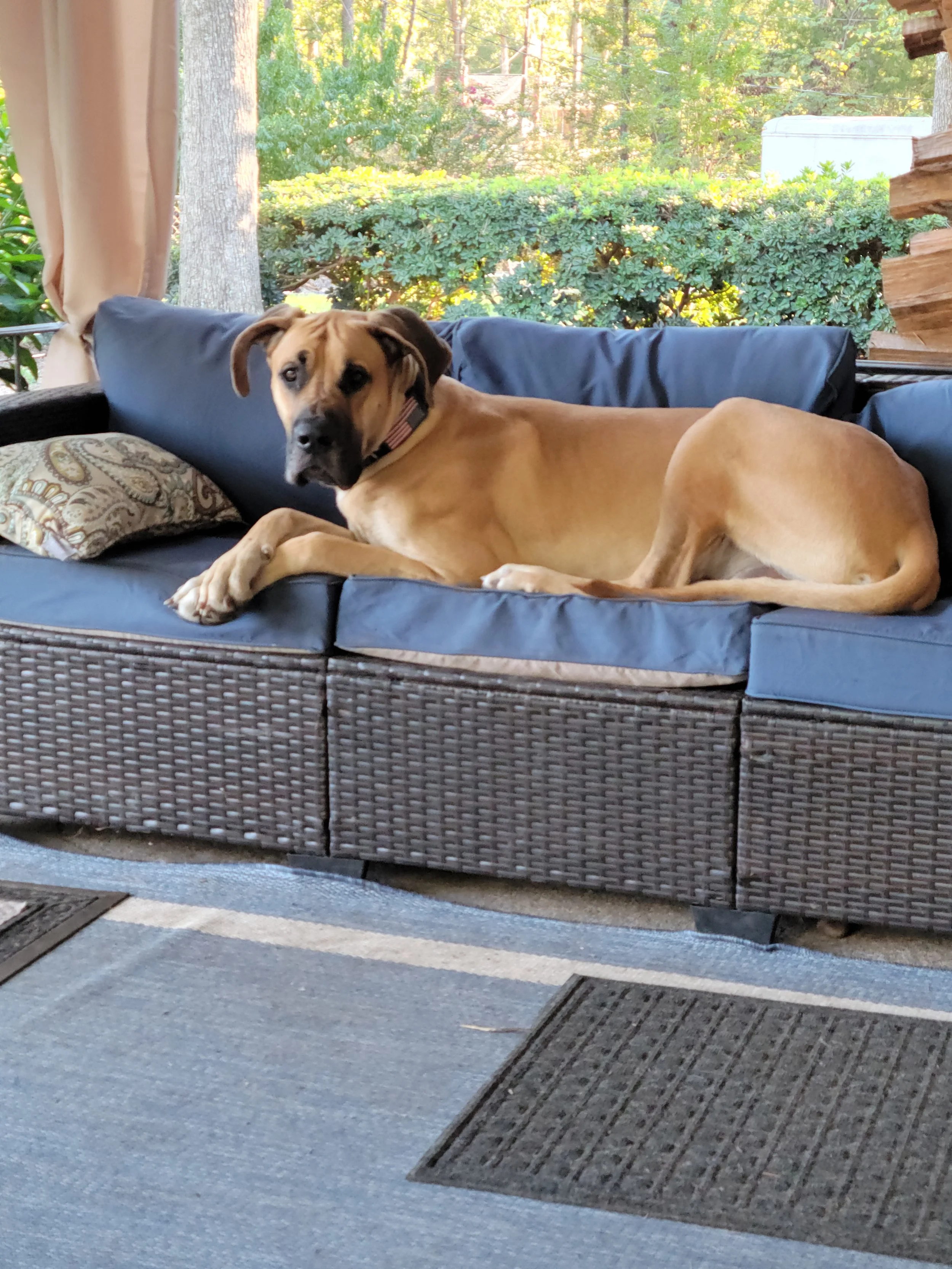
Waylon at 1 year old.
Don't Wait Until the Behavior Becomes a Problem
Because jumping, pulling, ignoring recall, charging the door, guarding, stealing something off the ground—whatever it is—can be relatively easy to physically interrupt with a 25-pound puppy. At 120+ pounds, you've lost that advantage.
It’s Never Too Late to Start
Starting early matters. But starting early is not the same thing as saying it's too late if you didn't. Maybe you didn't bring your dog home at 10 weeks old.
Maybe you adopted an adult giant-breed dog who never had much training. Maybe you're realizing that some of the things that were cute when your dog was smaller aren't so cute anymore.
Start now.
Training an adult dog may take more time, patience and consistency, especially when you're working with behaviors they've practiced for years. But adult dogs can absolutely learn new skills, new routines and new expectations. And maybe that's really what I've been trying to say through this whole post.
Training Is a Form of Love
We tend to think of training as teaching a dog to obey commands. I don't anymore.
To me, training is love, trust, respect and communication.
When I say “here” and Waylon comes to me, there's trust in that.
When I ask him to stay while someone enters our home, I'm not punishing him or asking him not to be a dog. I'm telling him, I've got this. Stay with me.
When I say “leave it,” he doesn't understand that I know the mushroom in the yard could hurt him. He just knows what those words mean and that I'm asking him to walk away from something he really wants to investigate.
We've built a language together.
And yes, setting boundaries and expectations with your dog will give you headaches sometimes. There will be days when they test you. There will be things you'll have to teach 100 times and then teach again.
But those boundaries aren't there to make a dog's life smaller.
They're there to give you more life together.
A dog who can listen to you, trust you and understand what you expect of him can safely be included in more of your world. And you get the confidence of knowing that when something unexpected happens, you have a way to communicate with each other.
Especially when your best friend happens to weigh more than some grown adults.
So start early if you can.
Start today if you didn't.
Keep training even when you think they know it.
And remember that you're not just teaching commands.
You're building a relationship with your furry best friend that you'll use for the rest of their life.
— Terry & Waylon
Giant Paws Market
Big dogs. Big love. Better finds.